

I am a senior steel structure systems engineer from Construction Engineering Intelligent Manufacturing Group Co., Ltd. This article shares insights from a professional perspective on "The Future of Green Construction" for interested readers.
We believe that decarbonization will transform how I engage with sustainable steel building practices by 2026. The steel industry is responsible for 3.7 billion tonnes of CO2 emissions each year, accounting for nearly 9% of the world's total emissions. Anhui Construction Engineering Intelligent Manufacturing Group Co., Ltd. stands out as a Green Steel Construction Solutions Provider, utilizing advanced Building Steel Structure technology. My work involves Prefabricated Steel Structure Building Systems, which significantly contribute to lowering emissions and establishing new industry standards.
The demand for greener solutions is rapidly increasing, especially considering that China produces 60% of all steel emissions globally.
|
Statistic |
Value |
|---|---|
|
Global emissions |
3.7 billion tonnes CO2 annually |
|
Share of global emissions |
7-9% of total CO2 emissions |
|
Average emission intensity |
1.85-1.89 tonnes CO2/tonne steel |
|
China's share of emissions |
60% of global steel emissions |
I am convinced that those who embrace innovation and take action now will shape the future.
Key Takeaways
-
Decarbonization is very important for the steel industry. The steel industry makes a lot of CO2. Using low-carbon solutions can help make the future cleaner.
-
Life cycle assessments (LCAs) help people pick better materials and designs. This can lower carbon emissions in building projects.
-
Modular construction and the circular economy use less waste and fewer resources. This means buildings have a smaller carbon footprint and are built more efficiently.
-
New technologies like electric arc furnaces and hydrogen-based steelmaking can cut emissions a lot. Green steel can be used for building in a sustainable way.
-
Working together and following rules is important for low-carbon building. This helps us reach long-term sustainability goals.
Decarbonization Trends in Steel Construction
The Shift to Low Carbon Solutions
Big changes are happening in steel construction. Decarbonization is needed now, not just wanted. New ways to lower emissions are appearing. These trends change how steel is made and used.
|
Decarbonization Pathway |
Description |
|---|---|
|
Low-carbon hydrogen |
Replaces natural gas in iron production, produced via electrolysis or CCS. |
|
Carbon capture and storage (CCS) |
Captures CO2 emissions from steel production processes. |
I use new methods in my work. Hydrogen-based direct reduced iron is common. Electric arc furnaces use renewable electricity. I use recycled scrap steel to cut emissions more. Carbon capture and storage works with blast furnaces. It traps carbon before it goes into the air.
🌱 Global rules like the European Green Deal and U.S. Inflation Reduction Act make me use low-carbon materials. Cities want low-emission standards for public buildings. I must use cleaner technology. Low-carbon steel can cut emissions by 70% with electric arc furnaces and renewable energy.
Policy rules like the Carbon Border Adjustment Mechanism in the EU matter too. They make me pick green steel by adding costs to imports with high emissions. These changes make decarbonization very important in my work.
Impact on Sustainable Steel Building
Decarbonization changes every part of my projects. I check environmental impact from the start. I look at carbon and other things before building begins. Life cycle assessments help me choose materials and designs that lower emissions.
|
Impact Area |
Description |
|---|---|
|
Material Selection |
LCAs show the carbon impact of picking concrete or mass timber. |
|
Design Decisions |
LCAs help decide if modular or prefabricated building lowers emissions. |
|
Investment Strategies |
Buildings with low lifecycle emissions get green finance and are more valuable. |
I use LCAs to make smart choices about materials and design. They help me set clear goals for cutting carbon. Using LCAs early helps me plan better and meet time and money targets.
Here is how low carbon solutions help my projects:
-
I check environmental impact from start to finish.
-
I look at carbon and other factors.
-
I reach reduction goals on time and on budget.
These steps help me build strong, efficient, and green buildings. Decarbonization is now a key part of my work. It shapes the future of steel construction.
Environmental Challenges and Opportunities
Reducing Embodied Carbon in Steel
I think there is a good chance to lower carbon in my projects. Embodied carbon means all the carbon from making, moving, and putting together building materials. I pick low-carbon materials for my prefabricated steel structures. These choices help me lower carbon right from the start. I also use modular construction methods. Prefabricated ways let me build quicker and make less waste. For example, I learned about a modular building in London. It cut embodied carbon by 40% compared to regular building. I follow the circular economy idea. This means I design buildings so parts can be reused or recycled later. I also choose low-carbon structural systems to lower carbon even more.
Here are some ways I lower embodied carbon in my work:
-
I use prefabricated and modular building methods.
-
I pick low-carbon materials and structural systems.
-
I use circular economy ideas in my designs.
Modular and Adaptive Reuse Strategies
I think modular and adaptive reuse plans help the environment a lot. When I use modular building, I use resources better. This means less resource use and a smaller carbon footprint. I also see less waste when making and building. My team and I make less noise and bother at the site. Modular building also means fewer trips to work, which lowers carbon emissions. When a building’s life ends, I can reuse many modules instead of throwing them away. This fits with the circular economy and helps keep my projects green.
Some main benefits of modular and adaptive reuse plans are:
-
Using resources better and less resource use
-
Less waste and a smaller carbon footprint
-
Fewer carbon emissions from travel and building
-
More reuse of building modules
Green Steel Innovations for the Future
Advanced Manufacturing and Digital Integration
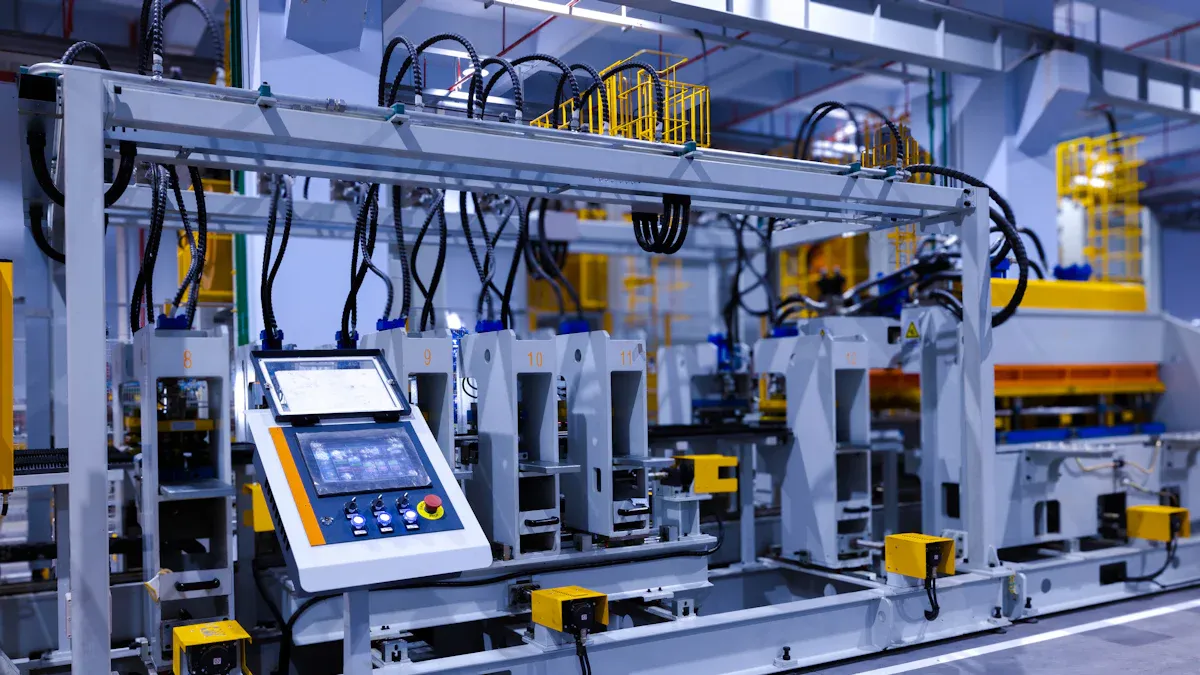
I see green steel changing how I work every day. I use new manufacturing tools to make strong, eco-friendly steel structures. In my factories, electric arc furnaces melt scrap steel or direct reduced iron. These furnaces use electricity, not coal. When I use renewable energy, I can cut carbon emissions by up to 85%. This is very important for my decarbonization plans.
I also use better pumping systems and new wastewater treatment. These tools help me save energy and protect nature. I think every step in my process should help make steel in a greener way.
Digital tools change how I run my projects. My digital management matrix uses Industrial IoT and Big Data. I watch every step of production as it happens. I use smart automation, like the ABB Ability System 800xA, to get sensor feedback and improve my work. This system helps me stop material problems and keep my products strong.
I learn from top companies. For example, ABB worked with Ningbo Baoxin Stainless Steel to make tension control better. This made production more stable and cut waste. I also use AI analytics to find the best settings fast. This helps me bring new steel products to market sooner.
My R&D team works with the University of Science and Technology of China. We go to events like the WCM & Industry 4.0 Innovation Conference in Hefei. At these events, I learn about new trends and digital changes. Over 420 people from more than 150 companies come. We share ideas and help green steel grow.
|
Event Name |
Location |
Focus Areas |
Participants |
|---|---|---|---|
|
WCM & Industry 4.0 Innovation Conference |
Hefei, Anhui |
Global manufacturing trends, digital transformation, management system innovation |
Over 420 representatives from 150+ enterprises |
Hydrogen-Based and Recycled Steel Processes
I think hydrogen-based steelmaking will change the industry. South Korea spent $227 million on FINEX technology. This shows they want cleaner steel. Studies show green hydrogen can cut CO2 by over 95%. I see this as a big win for the planet.
I watch global projects closely. Utility Global and ArcelorMittal are building a clean hydrogen project. They want to make up to 3 tons of hydrogen each day. This will help make steel even greener.
Recycled steel is also very important to me. I use electric arc furnaces that melt recycled scrap. This lowers CO2 to about 0.4 tons per ton of steel. Old blast furnaces release 1.8 tons per ton. By using recycled steel, I cut waste and help the circular economy. I use recycled steel in all my new steel projects, like bridges and factories.
Here is how I use new steel to help green construction:
-
I pick recycled steel for most of my prefabricated structures.
-
I use hydrogen-based steelmaking when I can to lower emissions.
-
I use digital tools to track and improve every step.
Green steel is not just a trend for me. It is the heart of my work. I see new steel as the way to a cleaner, greener future. My team and I will keep looking for better ways and smarter tools.
Real-World Applications and Case Studies
Anhui’s Prefabricated Steel Projects
I have worked on big projects that use sustainable steel. The Hefei-Zhoukou Expressway Dongfeihe River Bridge is a great example. I used prefabricated steel structures to build it faster and make less pollution. The Volkswagen Anhui Super Factory shows I can finish large projects quickly and with less harm to the air. These projects show we are moving toward a greener future.
Here are some important things that make my projects special:
|
Key Feature |
Description |
|---|---|
|
Rapid Construction Speed |
Prefabricated steel structures can be put together fast, so the whole project takes less time. |
|
Low Pollution Emissions |
These projects make much less pollution than regular concrete buildings. |
|
High Recyclability of Materials |
Up to 70% of the materials can be used again, which helps the environment. |
I always try to use sustainable steel building in my work. I make sure every project helps the construction industry get cleaner. My certifications, like “Intelligent Construction Pilot Enterprise” and ISO standards, show I care about quality. Awards such as the “Huangshan Cup” and “Wan Steel Cup” prove I work hard and use new ideas.
I think every good project helps the whole industry move to sustainable steel building.
Industry Benchmarks and Best Practices
I look at what other top companies do in sustainable steel building. Companies like Shougang Group and Tata Steel also care about the environment. Watching them helps me stay a leader in green construction.
|
Company |
Focus on Sustainability |
|---|---|
|
Shougang Group |
Works hard to make steel in a way that is better for the planet. |
|
Tata Steel |
Uses eco-friendly ways and gets special certificates. |
I follow the best ways to build from new case studies. I buy new technology to lower pollution. I work with other companies to share ideas and tools. I also spend money on research to help make steel building even greener.
|
Best Practice |
Description |
|---|---|
|
Technological Advancements |
New tools are being made to help create steel with much less pollution than old ways. |
|
Collaboration Across Supply Chain |
Companies work together to share ideas and help each other, even if there are rules to follow. |
|
Investment in R&D |
Companies spend more on research to make new ways to cut pollution. |
I see moving to sustainable steel building as a long trip. Every project, partnership, and new idea brings me closer to a world where green construction is normal.
Market Drivers and Regulatory Forces
Policy Incentives for Low Carbon Construction
I notice that strong rules help builders use low carbon construction. Governments set clear goals and give support to builders like me. These rules help me pick low carbon materials and methods for my work. I watch for new rules in every place I build. Here is a table with some important policies:
|
Region |
Key Policy |
Target Area |
|---|---|---|
|
United States |
Buy Clean |
Public infrastructure materials |
|
European Union |
CBAM, Level(s) |
Construction imports, building lifecycle |
|
Japan |
ZEB Roadmap |
Net-zero energy building mandate |
|
Australia |
NCC 2022 |
Whole-of-life emissions compliance |
These rules make me use low carbon solutions in every part of my projects. Sometimes, new rules can slow things down. For example, when the U.S. stopped helping green steel, companies like Cleveland-Cliffs did not invest in hydrogen projects. This shows that steady rules are very important for clean energy and low-carbon building.
Economic Benefits for Builders and Developers
I see that low carbon building saves money and time. Using decarbonization technologies makes my work faster and cheaper. Here are some ways I benefit:
|
Benefit Description |
Impact |
|---|---|
|
No formwork or steel moulds |
Cuts material and setup costs |
|
Optimised structural design |
Uses less concrete and saves money |
|
Digital fabrication |
Reduces mistakes and rework costs |
|
On-site or near-site production |
Lowers transport and crane costs |
|
Faster installation |
Helps avoid extra charges |
I compare green steel building to old ways. Green steel may cost more at first, but it lasts longer and needs fewer repairs. This means I spend less over time.
|
Aspect |
Green Steel Construction |
Traditional Methods |
|---|---|---|
|
Initial Costs |
Often higher for strong materials |
Usually lower at the start |
|
Maintenance |
Lower because it lasts longer |
Higher with more repairs needed |
|
Long-term Durability |
High, so costs go down over time |
Can be lower, so costs go up |
I think using low carbon and decarbonization technologies helps the planet and is smart for business. Builders who lead in this area get a big advantage in the market.
Benefits and Future Outlook
Environmental Impact and Carbon Reduction
I notice real progress in green construction. My projects follow green building trends that help the planet. These trends lower carbon emissions and protect nature. When I use electric arc furnaces and direct reduced iron, I can cut emissions by up to 95%. This is much better than old fossil fuel ways. I use more recycled steel now. This means I do not need as many new resources. It helps me reach net-zero buildings and meet tough green goals.
Here is a table that shows how green steel projects help:
|
Impact Type |
Measurement |
|---|---|
|
Carbon Emissions Reduction |
Up to 95% less compared to fossil fuels |
|
Recycling Efficiency |
Up to 93% of recycled scrap used |
|
CO2 Emissions Reduction Goal |
25% by 2030 globally, 35% in Europe |
I use new steelmaking technology to lower emissions by over 50%. If these tools get cheaper, I can cut emissions by 75%. These changes are important for carbon-neutral buildings and energy-saving designs. I think using green materials and following green building trends will help me reach net-zero goals.
The Future of Sustainable Steel Building
I think the future of green construction looks good. Green building trends show that low-carbon steelmaking will be normal soon. More builders will use hydrogen-based direct reduction and electric arc furnaces. These ways help lower carbon in building materials and make net-zero buildings.
Here is a table with trends for the next five years:
|
Trend |
Description |
|---|---|
|
Low-Carbon Steelmaking |
The shift towards low-carbon steelmaking is crucial due to steel's significant contribution to global carbon emissions. |
|
Advanced Technologies |
Adoption of technologies like hydrogen-based direct reduction iron (HDRI) and electric-arc furnaces (EAFs) is increasing. |
|
Diversification of Applications |
Growing demand for advanced steel grades in sectors like electric vehicles and renewable energy projects. |
I see top companies working together and making long-term plans for green building. Governments help by supporting new technology. I teach clients about why green construction is good. I believe that by using green building methods and trends, I can help build a better world for everyone.
I think decarbonization and green steel will change how we build with prefabricated steel structures. Anhui Construction Intelligent Manufacturing Group Co. Ltd. uses new technology and works with strong partners. People can use low-carbon ideas faster by joining groups and trying new ways to buy materials.
|
Initiative |
Description |
|---|---|
|
SCoBA |
Gets buyers to work together for low-carbon materials. |
|
Demand Aggregation |
Puts demand together to help lower emissions. |
I team up with others to match energy plans and make production better. I believe working together and using digital tools will help us make a greener world.
FAQ
What makes prefabricated steel structures more sustainable?
I pick prefabricated steel structures because they make less waste. They help me build things faster. I can also recycle the materials when I am done. These ways help me lower carbon emissions. They also help me reach green building goals.
How does Anhui Construction Engineering Intelligent Manufacturing Group Co., Ltd. ensure quality in green steel projects?
I use advanced digital management to check my work. My team follows strict ISO certifications. We keep learning and doing research all the time. We work with top universities and follow national rules. This helps us give strong and green steel solutions.
Can recycled steel match the strength of new steel?
Yes, recycled steel can be just as strong as new steel. I use recycled steel that meets all safety rules. Modern ways make sure recycled steel works well in every project.
What role does digital technology play in decarbonization?
Digital tools help me watch how things are made. They help me use less energy and track carbon emissions right away. This helps me work better and meet tough environmental goals.
You May Also Like
What is steel Structure Building and Metal Building Framing Components