

Imagine living close to a busy highway. The loud sounds can make it tough to rest or sleep. Highway sound barriers block the noise. They help you feel calm and keep you healthy. Many cities use these barriers. Noise pollution affects millions of people.
For example:
|
Country |
Percentage of Population Exposed to Noise Levels Above Recommended Thresholds |
|---|---|
|
Spain |
60% |
|
EU (stricter criteria) |
Over 30% (about 106 million people) |
Sound attenuation lowers these bad noise levels. It helps make neighborhoods quieter and healthier. Want to see how these barriers compare to other traffic safety solutions? Read our guide about modern traffic safety facilities.
Highway sound barriers stop noise from busy roads. They help neighborhoods stay quiet and healthy.
Sound barriers lower stress. They help people sleep better. They protect against hearing loss. They also help prevent heart disease.
Barriers block, absorb, and spread out sound waves. They use materials like concrete and metal.
Workers check and fix barriers often. This keeps them working well. It helps keep the area quiet.
Picking the right height, length, and material is important. It helps get the best noise reduction for your area.
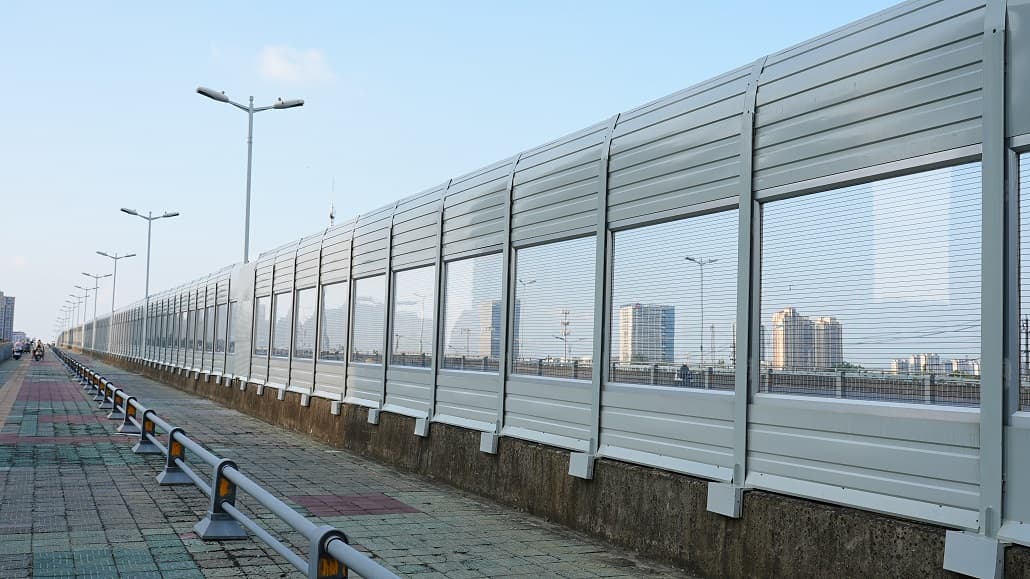
You can spot highway sound barriers near busy roads. These walls are tall and stand between highways and neighborhoods. Their main job is to stop traffic noise from reaching homes, schools, and parks. If you live close to a highway, you know engines and horns are loud. Highway sound barriers use strong materials like concrete, metal, or special panels. They block sound waves from going straight into your neighborhood. If you want to know how these barriers work with other safety features, check out our guide on modern traffic safety facilities.
Noise barriers lower the amount of noise that comes from highways. When you put up noise barriers, you make a shield that keeps things quieter. Most barriers cut noise by about 10 decibels, but some can lower it by 5 to 15 decibels. This change makes a big difference in your daily life.
You should have peace and quiet at home. Noise barriers keep you safe from loud traffic sounds. Without them, it can be hard to sleep or pay attention. Hearing highway noise all the time can hurt your health. You might feel more stress and worry. Kids can have mental health problems. Being around noise for a long time can lead to more heart disease. You may have trouble sleeping, feel moody, or find it hard to focus. Loud noise can even hurt your hearing.
More stress and worry
Mental health problems in kids
More heart disease
Trouble sleeping, mood changes, and hard to focus
Hearing loss and other ear problems
Noise barriers help you stay away from these problems. They make your home and neighborhood safer and healthier. When you support highway sound barriers, you help yourself and your community.
You hear sound every day, but do you know how it moves? Sound travels in waves, like ripples in a pond. When cars and trucks drive on highways, their engines and tires create vibrations. These vibrations move through the air as sound waves. If you live near a highway, these waves reach your ears and make everything seem loud. Hard surfaces, like roads and buildings, reflect sound and make it even worse. You cannot see sound waves, but you can feel their impact on your comfort and health.
Tip: If you clap your hands near a wall, you hear an echo. That echo is sound bouncing back, just like highway noise can bounce into your home.
You want peace and quiet at home. Highway sound barriers help you get that by using attenuation. Attenuation means making sound weaker as it moves from the highway to your house. Barriers work in several ways:
They block sound waves, so less noise gets through.
They force sound to travel over or around the barrier, which makes it lose energy.
Some barriers absorb sound, turning it into a tiny bit of heat.
Sound attenuation is not magic. It uses science to protect you. The taller and longer the barrier, the more attenuation you get. Trees and bushes can help, but solid barriers do a better job. If you want the best results, you need a barrier designed for your area. When you support sound barriers, you invest in your health and your community’s well-being.
You want your house to be quiet. Highway sound barriers help by bouncing noise away. When cars and trucks drive by, they make loud sounds. These sounds move in waves. A barrier stands tall and strong. It makes the noise bounce back to the highway or up into the sky. You do not have to hear every honk or engine sound.
A curved noise barrier works even better. Its shape sends sound waves in many directions. This stops noise from slipping around the edges. You get more peace and less stress. Reflection and deflection are the first way to fight noise. But they do not block all sound. Some noise can go over the top or around the sides. That is why you need more than just a wall.
Note: A curved noise barrier can cut noise by 10-15 decibels. This makes a big difference in how quiet your home feels.
You need a barrier that does more than bounce sound away. Absorption and diffusion help even more. When noise hits the barrier, some gets soaked up. The barrier turns sound into a tiny bit of heat. You hear less noise because less sound gets through. Diffusion spreads sound out. This breaks up loud spots and makes things quieter.
Modern highway sound barriers use special materials to work better. These materials have many good features:
|
Characteristic |
Description |
|---|---|
|
Lightweight Yet Strong |
Strong but not heavy, so it is easier to move and install. |
|
Corrosion Resistance |
Does not rust, so it is good for wet or salty places. |
|
Design Flexibility |
Can be made in many shapes and colors for looks and use. |
|
Density and Rigidity |
Hard and thick, so it bounces back lots of sound. |
|
Potential for Absorptive Additions |
Can add sound-absorbing parts to make it work even better. |
|
Durability |
Stays strong in sun, rain, and changing temperatures. |
|
Reduced Maintenance |
Needs less fixing than wood or metal barriers. |
A curved noise barrier often uses these materials. It can reflect, absorb, and spread out sound. You get a barrier that lasts longer and works better. You also save money on repairs. But not all materials work the same. Some barriers do not soak up enough noise if they are only hard. For the best results, pick a barrier with strong sound attenuation and built-in absorption.
You want your family and neighbors to feel safe and calm. Highway sound barriers protect your community from loud highway noise. A curved noise barrier can wrap around busy roads. It blocks sound from reaching homes, schools, and parks. This shield gives you a quieter place to live, learn, and play.
Sound attenuation helps your health. You sleep better, focus more, and enjoy being outside. Barriers with good sound attenuation really help. Still, no barrier can stop all noise. Some sound will always get through gaps or over the top. You can get more protection by adding other things, like plants or new traffic safety tools. For more ideas, check out our guide on modern traffic safety facilities.
Tip: Pick a barrier that fits your area. A curved noise barrier with strong absorption and diffusion will give you the best shield from highway noise.
Highway sound barriers help you protect your community. When you choose the right barrier, you help make a healthier and happier future.
You want the best protection from highway noise. To get optimal sound attenuation, you need to understand what makes a barrier work well. Several factors play a big role in how much noise you can block. Take a look at the table below to see the main things that matter:
|
Factor |
Description |
|---|---|
|
Height |
Taller barriers block more noise, but you must balance height with looks and safety. |
|
Density |
Heavier materials, like concrete, stop sound waves better. |
|
Surface Texture |
Rough surfaces scatter sound, making the other side quieter. |
|
Distance from Source |
Barriers closer to the road stop noise before it spreads out. |
You need a barrier that is tall enough to block the line of sight between you and the highway. If you can see cars over the top, noise will reach you. Taller barriers give you better attenuation because they stop more sound waves. Length matters too. A short barrier leaves gaps for noise to slip through. You want a barrier that covers the whole area between your home and the road. Engineers always try to balance height with safety and how the barrier looks in your neighborhood.
Tip: Choose a barrier that is both tall and long enough to shield your home for the best results.
Where you put the barrier changes how well it works. Barriers close to the highway block noise before it spreads. If you move the barrier farther away, it loses power. The land around your home also matters. Barriers can fit on hills, uneven ground, or next to plants. Green noise barriers use climbing plants to blend in and help local animals. These barriers give you a quieter space and help nature at the same time.
Barriers adapt to different terrains and road layouts.
Green barriers offer homes for birds and insects.
You want a barrier that fits with other traffic safety features. Good design means the barrier works with guardrails, signs, and lighting. When you combine these features, you get better safety and sound control. A well-designed barrier looks good and keeps your community safe. You should always ask for a barrier that matches your area’s needs and works with other safety tools. This gives you the most effective and attractive solution for noise problems.
Remember: The right design and smart integration lead to optimal sound attenuation and a safer, quieter neighborhood.
You want a sound barrier that works well and lasts long. Highways use concrete, aluminum, glass, and wood. Each material helps block noise in its own way.
|
Material |
Sound Attenuation Property |
|---|---|
|
Concrete |
Excellent airborne sound insulation |
|
Aluminum |
Absorbs up to 21dB of noise |
|
Glass |
Reflects noise back to the source |
|
Wood |
Advanced noise protection, ecological and economical |
Concrete is strong and keeps out bad weather. Aluminum is light and absorbs lots of noise. It is easy to put up. Glass bounces sound away and lets light through. You can see through it, so it does not block your view. Wood blocks noise and looks nice. It fits well in parks or neighborhoods. Always check how much noise each material can block before you choose.
Tip: Pick a material that fits your area and weather. This helps you save money and get better results.
New materials and technology make barriers work even better. Some barriers use solar panels to make energy and block noise. In the Netherlands, engineers built a 450-meter barrier with solar panels on both sides. It made clean energy and lowered CO2 during an 18-month test. Investors like these barriers because they save money and help the earth.
Other new barriers use recycled rubber or special plastic sheets. These last longer and do not break easily in sun or rain. You get a barrier that works well and needs less fixing.
Solar panel barriers make energy and cut pollution.
Recycled rubber panels block noise and help the planet.
High-tech plastic sheets stay strong and clear in bad weather.
You want the best deal for your community. New precast concrete barriers cost less to build and need little fixing. You save money over time. Plastic sheets like CRYLON® and IMPEX® are tough, block sunlight, and do not break easily. Barriers made from recycled rubber last longer and block more noise than old ones.
If you want to know how these materials work with other safety features, read our guide on modern traffic safety facilities.
Remember: The right material blocks more noise, saves money, and helps the earth.
You want your highway sound barrier to last a long time. Taking care of it helps keep your community quiet. If you do not check on it, you might lose the peace you want.
You should look at your sound barrier often. Bad weather, crashes, and people can hurt it. If you find a problem early, you can fix it fast. Here are some things that can go wrong:
Rain, snow, and sun can slowly damage the barrier.
Cars or trucks may hit it and make cracks or holes.
Vandalism can break parts and make it weaker.
If you see these problems, fix them quickly. Fast repairs keep your barrier strong. You save money and keep your neighborhood quiet.
Tip: Check your barrier often so small problems do not become big ones.
A barrier in good shape blocks more noise. If the material gets old, more sound gets through. Your home may get louder if you skip repairs. Even the best barriers get weaker over time. You can slow this down with good care and upgrades.
Weather and age can make the barrier block less noise.
Damage from crashes or vandalism can let sound pass through.
You need a barrier that works well. Keep it fixed to protect your peace and health.
You can make your barrier work better with other safety tools. For example, a Highway Low Deformation Guardrail stops cars from hitting your barrier. This guardrail keeps drivers and your barrier safe. Using both gives you more protection and fewer repairs.
Want to know how safety tools work together? Read our guide on modern traffic safety facilities.
Remember: Good care and smart upgrades keep your barrier strong, your community quiet, and your investment safe.
Highway sound barriers help you feel calm and safe. They lower noise and can make solar power with new designs. The Neuötting project shows barriers can make electricity and block sound. But these barriers can cost more and have strict rules. You may still hear some noise and must check barriers often. New ideas use smart materials and AI to watch barriers. Green spaces can help cities stay quiet. If you want more ways to help your town, read our guide on modern traffic safety facilities. Everyone should have a safe and quiet home.
You can expect most barriers to cut noise by 5 to 15 decibels. This change makes your home feel much quieter and more comfortable.
Sound barriers help most communities. You get the best results when you choose the right height, length, and material for your area. Ask an expert for advice.
Plants and trees help a little, but you need solid barriers for strong noise protection. You can combine greenery with barriers for better results and a nicer look.
Check your barrier at least once a year. Look for cracks, damage, or wear. Quick repairs keep your neighborhood quiet and safe.

leave a message
Scan to Wechat/Whatsapp: