

You play a vital role in ensuring safe and efficient roads by focusing on correct Highway Network Truss and signs placement. Customizing solutions for new projects presents unique challenges. Reliable partners with proven service advantages and government references help you avoid common pitfalls. Studies show that proper sign design and placement improve driver response and do not increase safety risks, even with complex sign structures.
Correct sign placement leads to competitive response rates for drivers.
Crash studies confirm no additional safety risk with more than six logos on sign structures.
You can explore Traffic Safety Facilities for products that enhance highway safety.
Proper sign placement is crucial for driver safety. Follow MUTCD guidelines to ensure signs are at the right height and angle.
Choose the right truss type based on load requirements and environmental conditions. This prevents structural failures and enhances safety.
Regular maintenance is essential. Inspect signs and trusses frequently to catch issues early and ensure they remain effective.
Compliance with highway standards is non-negotiable. Use approved products to avoid legal issues and enhance road safety.
Enhance sign visibility with reflective materials and proper lighting. This helps drivers see signs clearly, even in poor conditions.
When you plan or manage a highway project, you must avoid several common mistakes in highway network truss and signs placement. These errors can lead to safety hazards, confusion, and costly repairs. By understanding these pitfalls, you can ensure safer and more efficient roads. For a wide range of solutions, you can explore Traffic Safety Facilities that address many of these challenges.
Improper sign positioning happens when you place signs at the wrong height, angle, or distance from the road. This mistake often occurs when you mix ground-mounted and overhead signs without considering driver sightlines. The Manual on Uniform Traffic Control Devices (MUTCD) highlights the importance of correct sign placement:
Uniform traffic control devices are essential for roadway safety.
They guide users towards predictable behavior and safe operating speeds.
Proper sign positioning can prevent crashes and reduce injury risks.
The MUTCD outlines five basic principles for traffic control devices:
Fulfill a need
Command attention
Convey a clear, simple meaning
Command respect from road users
Give adequate time for proper response
Improperly positioned signs can lead to misoperation by drivers, particularly when speed limits are not aligned with road conditions.
Driver information overload occurs when motorists receive too much information, leading to inadequate time to perceive and respond. This overload can result in severe deceleration, erratic maneuvers, and increased eyes-off-the-road time, all of which have significant safety implications.
You should always follow MUTCD guidelines and use durable materials for signs to ensure they remain visible and effective over time.
Choosing the wrong truss for your highway network truss and signs can cause structural problems and safety risks. Transportation safety studies report that loosening of bolts in sign support trusses often leads to structural failures. These failures can result in local fatigue fractures and partial loosening of bolted connections. You must select the right truss type based on several criteria:
|
Criteria |
Description |
|---|---|
|
Span Length |
The distance the truss must cover without support. |
|
Expected Load |
The weight the truss must support, including vehicles and potential traffic. |
|
Site Conditions |
The geographical and environmental factors affecting the bridge location. |
|
Budget |
Financial constraints that influence material and design choices. |
|
Desired Aesthetics |
The visual appeal and design preferences for the bridge. |
|
Environmental Exposure |
The conditions the bridge will face, such as weather and corrosion risks. |
|
Maintenance Requirements |
The upkeep needed to ensure the bridge remains safe and functional. |
Selecting the right truss configuration is crucial for performance. Common truss types have specific ideal applications. Design parameters influence member sizing, connections, and overall geometry.
Poor visibility of signs is a frequent mistake that increases accident risks. Research shows that reduced visibility significantly raises the chance of traffic crashes, especially rear-end collisions. The Federal Highway Administration reports that over 38,700 traffic accidents occur annually during foggy conditions, causing more than 16,300 injuries and over 600 fatalities each year. The likelihood of crashes rises during low visibility driving conditions, showing a direct link between poor visibility and accident rates.
You should place signs where drivers can see them clearly, even in bad weather or at night. Use reflective materials and proper lighting to enhance visibility. Regularly check for obstructions like trees or new construction that may block signs.
Non-compliance with highway standards is a serious mistake. The MUTCD and local regulations set strict rules for highway network truss and signs. Ignoring these standards can lead to legal issues and increased accident risks. You must ensure that all signs meet the required size, color, and placement guidelines. Using approved products, such as Highway Directional and Regulatory Traffic Signs, helps you stay compliant and maintain road safety.
Neglecting maintenance is another common error. Over time, bolts in trusses can loosen, and signs can fade or become damaged. Transportation safety studies frequently report issues such as the loosening of bolts in sign support trusses, which can lead to significant structural failures. These failures pose serious risks to traffic safety. Common types of damage include local fatigue fractures and partial loosening of bolted connections, which necessitate effective monitoring and maintenance strategies.
You should set up regular inspection and maintenance programs. Check all highway network truss and signs for wear, corrosion, and stability. Replace damaged signs promptly and tighten any loose bolts. This proactive approach keeps your roads safe and reduces long-term costs.
By understanding and avoiding these common mistakes in highway network truss and signs placement, you can create safer highways and improve traffic flow.
You often see positioning errors when teams mix ground-mounted and overhead signs without considering how drivers view the road. Several factors contribute to these mistakes:
Improper placement of signs creates confusion for drivers.
Teams sometimes fail to update signs as site conditions change, which increases risks.
Lack of multilingual or symbol-based signs leads to misunderstandings, especially for international travelers.
When you plan a new highway, you need to consider the unique challenges of customizing traffic safety products. You can find solutions for these challenges at Traffic Safety Facilities.
Improper sign positioning affects both safety and navigation. Drivers may not see the sign in time, which can cause sudden braking or merging. This behavior disrupts traffic flow and increases accident risks. Transportation studies show that unclear signs result in aggressive deceleration and merging. These actions create congestion waves and chaotic spillover effects on the road. Effective signs help drivers make decisions smoothly, stabilizing traffic and reducing congestion.
You need to ensure that every sign is visible and easy to understand. This approach keeps the road safe and helps drivers navigate confidently.
You can avoid positioning mistakes by following best practices recommended by transportation authorities. The table below summarizes key strategies:
|
Best Practice |
Description |
|---|---|
|
Proper Sight Distance |
Always check sight distance when planning new signs to ensure safety and confidence for drivers. |
|
Minimize Sign Clutter |
Efficient highway layouts avoid too many signs to prevent confusion and slow driving. |
|
Consider Driver Speed |
Place signs before drivers need to make decisions, allowing time to react safely. |
|
Ensure Visibility |
Regularly check sign locations to remove obstructions and maintain clarity, especially in adverse conditions. |
|
Use Clear Messaging |
Keep messages short and clear so drivers can make quick decisions without confusion. |
Tip: Regular inspections and updates help maintain sign visibility and effectiveness.
By following these guidelines, you improve safety and efficiency on every road project.
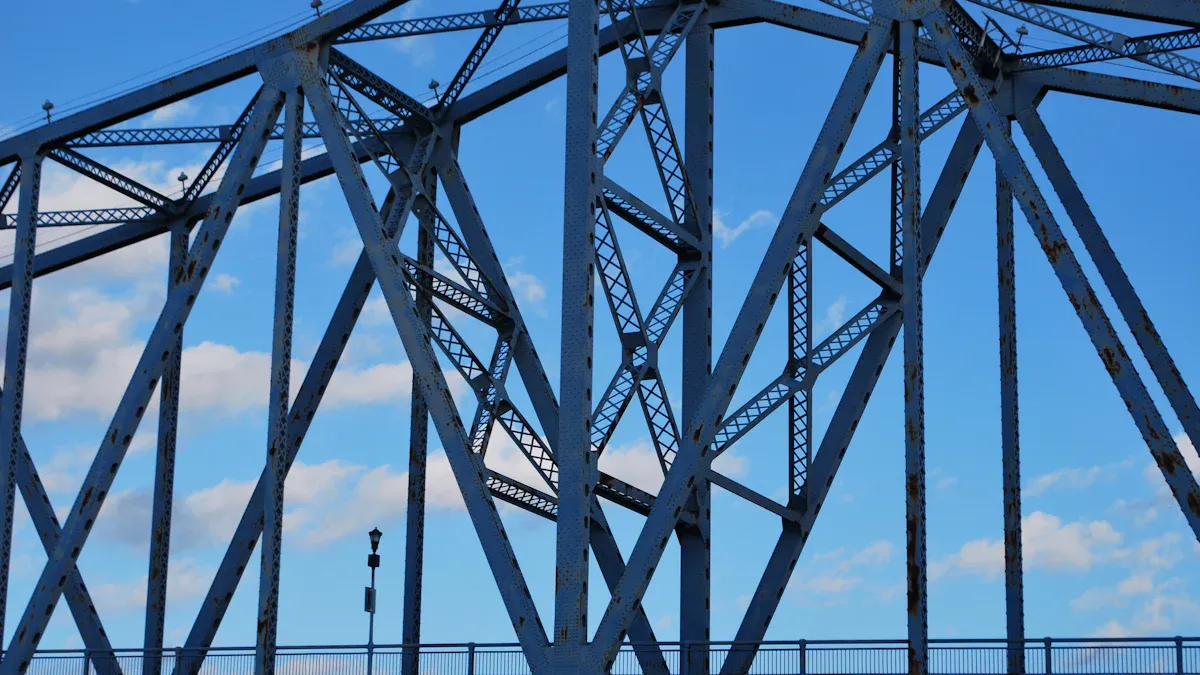
You need to select the right truss for your highway project to ensure safety and durability. Trusses support critical elements like signage, lighting, and communication systems. The choice of truss type and material affects the performance and lifespan of your infrastructure. When you plan for new installations, consider several key factors:
|
Key Factor |
Description |
|---|---|
|
Load Requirements |
Trusses must support various loads, including snow and wind, as dictated by local building codes. The design should meet or exceed these requirements for structural integrity. |
|
Environmental Conditions |
Humidity and temperature can affect truss performance. Areas with heavy snow or high winds require specially designed trusses for added strength. |
|
Span Dimensions |
Longer spans need deeper or more complex truss designs. The required span influences the choice of truss type, with larger areas benefiting from designs that distribute loads across multiple connections. |
|
Architectural Aesthetics |
Trusses can serve as architectural features. The design impacts the visual appeal, especially when exposed. |
You can enhance your signage systems by choosing trusses that work seamlessly with Highway Directional and Regulatory Traffic Signs. This integration ensures that signs remain stable and visible under all conditions.
Improper truss selection can lead to serious safety risks. You must understand the potential consequences to avoid costly mistakes. The table below highlights common risks:
|
Risk Type |
Description |
|---|---|
|
Inadequate Load Distribution |
Failure to properly distribute loads can lead to structural failure under expected loads. |
|
Neglect of Lateral Forces |
Not accounting for lateral forces can result in instability and potential collapse. |
|
Insufficient Environmental Design |
Failing to design for wind and uplift can compromise the structure's integrity in adverse conditions. |
|
Lack of Review |
Many structures are built without proper review of truss designs, increasing risk of failure. |
Tip: Always review truss designs with qualified engineers to prevent these risks and ensure long-term safety.
You can follow several best practices to optimize truss selection for highway signage and lighting:
Use standard pole spacing layouts such as one-sided, opposite, staggered, and median lighting.
One-sided spacing works well for one to three lanes, while staggered layouts suit three to six lanes.
Opposite layouts are ideal for five or more lanes, and median lighting can reduce the number of poles by half.
Perform lighting calculations to define optimal pole spacing and layout.
Consider land use, road width, and service vehicle reach when determining pole height and luminaire wattage.
By applying these guidelines, you create safer and more efficient highway networks. Proper truss selection supports reliable signage, lighting, and communication systems, helping you maintain high standards for every project.
You face several challenges when ensuring that highway signs remain visible and readable. Factors such as glare from headlights, obstructions like trees or construction, and weather conditions can reduce sign effectiveness. Drivers rely on visual acuity and contrast sensitivity to spot signs quickly. If signs lack proper luminance or suffer damage, their retroreflective performance drops, making them harder to see, especially at night.
Visual acuity affects your ability to discern details from a distance.
Contrast sensitivity helps you detect differences in brightness, which is crucial for distinguishing signs from their backgrounds.
Sign luminance, whether from internal lighting or retroreflective sheeting, directly influences legibility.
Damaged signs lose retroreflectivity, reducing visibility.
You can find solutions for these issues by exploring Traffic Safety Facilities, which offer products designed to improve sign performance under various conditions.
Reduced sign visibility impacts how you respond while driving. Nighttime conditions, glare, and unlit areas make it difficult to detect hazards.
Drivers experience reduced visibility even with headlights, making hazard detection challenging.
The human eye struggles in low-light conditions, leading to slower reaction times and increased accident risk.
Nighttime driving in unlit areas raises the chance of missing pedestrians or vehicles.
Late evening hours bring higher risks due to darkness and impaired drivers, further complicating visibility and response times.
Clear and readable signs, such as Highway Directional and Regulatory Traffic Signs, help you make safer decisions and reduce accident likelihood.
You can use proven methods to enhance sign visibility and readability. The table below summarizes effective strategies:
|
Method |
Effectiveness |
Relative Cost |
|---|---|---|
|
Larger Devices |
Recommended for special applications. |
Low Cost |
|
Doubling-Up Devices |
Increases visibility. |
Low Cost |
|
Retroreflective Strip on Post |
Moderate reductions in speed observed. |
Low Cost |
|
Highly Retroreflective Sheeting |
Improves driver perception, especially with fluorescent yellow. |
N/A |
|
Safety Masking Techniques |
Enhances visibility through high-contrast colors and reflective materials. |
N/A |
You can also improve sign placement by positioning signs in high-traffic areas and reducing visual clutter. Safety masking techniques, such as using high-contrast colors and reflective materials, make signs stand out even in challenging conditions. For advanced solutions, consider Highway Network Truss and Girder Bridges, which support optimal sign placement and durability.
By applying these strategies, you ensure that highway signs remain visible and readable, helping drivers stay safe and confident on the road.
You must pay close attention to highway standards when planning and installing signs and trusses. The Manual on Uniform Traffic Control Devices (MUTCD) and international guidelines set clear rules for sign shapes, colors, and placement. Ignoring these regulations can cause confusion for drivers and increase accident risks. You can find reliable solutions that meet these standards at Traffic Safety Facilities. These products help you maintain compliance and improve road safety.
Non-compliance with highway signage standards brings serious consequences. You face legal penalties and safety risks if you use signs that do not meet approved guidelines. The table below shows the main implications:
|
Implication Type |
Description |
|---|---|
|
Legal Consequences |
Failure to use MTO-approved signs can lead to fines and legal liabilities for construction companies. |
|
Safety Risks |
Non-compliance can result in accidents due to unclear signage, increasing liability for involved parties. |
|
Reputation Damage |
Using non-approved signs can harm the reputation of traffic control companies regarding safety and reliability. |
You protect your company and the public by following standards for Highway Directional and Regulatory Traffic Signs. Clear and compliant signs reduce confusion and help drivers make safe decisions.
You can take practical steps to ensure your highway network truss and signs meet all regulations. Follow these recommendations:
Conduct audits to assess current signage compliance.
Consult with experts to ensure adherence to MUTCD standards.
Use uniform shapes, colors, and symbols for all signs to enhance clarity.
Follow specific rules for the placement and size of signs to ensure visibility.
Tip: Regular reviews and updates help you stay compliant and avoid costly mistakes.
You strengthen your highway projects by using approved products and following best practices. For advanced solutions that support compliance, explore Highway Network Truss and Girder Bridges. These systems help you meet standards and build safer roads.
Regular maintenance and inspection keep your highway network truss and signs safe and reliable. You can find specialized solutions for these tasks at Traffic Safety Facilities. Without a consistent maintenance routine, you risk structural failures and safety hazards.
You often see gaps in maintenance when teams overlook routine checks or delay repairs. Signs may fade, bolts loosen, or trusses suffer from corrosion. These issues reduce the effectiveness of your highway network. Maintenance gaps usually happen because of limited resources or lack of clear schedules. You need to inspect signs and trusses regularly to catch problems early.
Neglecting maintenance creates serious risks for motorists and road managers. You face:
Structural failures from fatigue in sign-support structures, which can lead to dangerous conditions.
Safety hazards that increase accident risks.
Higher repair costs when you ignore regular inspections and maintenance.
You protect drivers and reduce expenses by prioritizing maintenance. Using Highway Directional and Regulatory Traffic Signs helps you maintain compliance and visibility.
You can set up effective maintenance programs with a few simple steps. Start by creating a schedule for inspections. Use checklists to track the condition of trusses and signs. Assign responsibilities to trained staff. Record all maintenance activities for future reference. The table below shows a sample maintenance routine:
|
Task |
Frequency |
Responsible Person |
|---|---|---|
|
Visual Inspection |
Monthly |
Maintenance Team |
|
Bolt Tightening |
Quarterly |
Technician |
|
Sign Cleaning |
Bi-monthly |
Crew |
|
Corrosion Check |
Annually |
Engineer |
Tip: Use advanced products like Highway Network Truss and Girder Bridges to simplify maintenance and improve durability.
You ensure safer roads and longer-lasting infrastructure when you follow a structured maintenance plan.
You face unique challenges when planning new highway projects. Every site has different requirements for truss structures and sign placement. Custom solutions help you address these needs and avoid common mistakes. Products like Traffic Safety Facilities offer tailored options for visibility, durability, and compliance. You improve safety and efficiency by choosing solutions that match your project’s specific conditions.
Tip: Early collaboration with experienced teams helps you identify potential issues before construction begins. You reduce risks by reviewing site conditions, traffic patterns, and local regulations.
Expert partners bring valuable experience to your highway projects. You benefit from their innovative techniques and careful planning. These professionals often complete projects ahead of schedule and minimize traffic disruptions. For example, some teams move truss bridges into place over a weekend, reducing impact on drivers. You also gain from their ability to work with stakeholders, ensuring compliance and addressing community concerns.
You receive advanced construction methods that save time.
You experience fewer delays and smoother traffic flow.
You achieve better regulatory compliance through stakeholder collaboration.
Selecting partners with proven expertise in Highway Directional and Regulatory Traffic Signs ensures your signage meets all standards and remains effective.
Successful highway projects often rely on strong government references and lessons from past case studies. The table below highlights key aspects from a recent interchange project:
|
Aspect |
Details |
|---|---|
|
Aesthetic Treatments |
Unique stone parapet walls, decorative fencing, and custom traffic signal support trusses enhanced appeal. |
|
Challenges |
Funding for enhancements required creative solutions and multiple sources. |
|
Successes |
Testing color patterns and hiring an urban forester improved landscaping and visual integration. |
|
Lessons Learned |
Long-term maintenance and weathering of aesthetic elements proved essential for lasting results. |
You learn from these examples by considering maintenance, ownership transitions, and contractor responsibilities early in your planning. Using Highway Network Truss and Girder Bridges helps you achieve both functional and aesthetic goals.
Note: Custom solutions and expert partners give you the confidence to avoid pitfalls and deliver successful highway projects.
You improve highway safety by avoiding mistakes in truss and sign placement. Custom solutions and proactive planning deliver strong results. The table below shows how accessibility planning and collaboration types benefit your projects:
|
Aspect |
Benefit |
|---|---|
|
Accessibility Planning |
Optimizes masterplans and travel planning. |
|
Innovative Software |
Delivers key performance indicators for travel time and cost. |
|
Design-Build |
Provides sensible options for infrastructure development. |
Reliable partners with government references help you achieve compliance and lasting quality. Explore Highway Network Truss and Girder Bridges for dependable infrastructure solutions.
You need to check visibility, location, and compliance with standards. Signs must be easy to see on highways and roads. Traffic Safety Facilities help you improve road safety and meet engineering requirements.
Truss selection impacts the strength and durability of bridges and highway infrastructure. You must choose the right materials and design for each route. This ensures safety and supports traffic flow in the united states numbered highway system.
Maintenance keeps roads safe and prevents failures. You should inspect signs and bridges often. Cleaning, tightening bolts, and checking for corrosion protect your infrastructure and support traffic safety assessments.
You follow MUTCD and local regulations for highway engineering. These standards cover sign placement, bridge construction, and road safety audits. Highway Directional and Regulatory Traffic Signs help you stay compliant.
Custom solutions address unique site needs in highway construction. You get better results by using products designed for your roads and bridges. Highway Network Truss and Girder Bridges enhance infrastructure and support controlled-access highways.
Tip: Always review your engineering plans and consult experts for the best results in highway projects.

leave a message
Scan to Wechat/Whatsapp: